
Liberation sites qualify for World Heritage evaluation by UNESCO
South Africa welcomed Mr Charles Akibode of the International Council on Monuments and Sites (ICOMOS) who is on a mission to evaluate Liberation Heritage sites on behalf of the United Nations Educational, Scientific and Cultural Organisation (UNESCO).
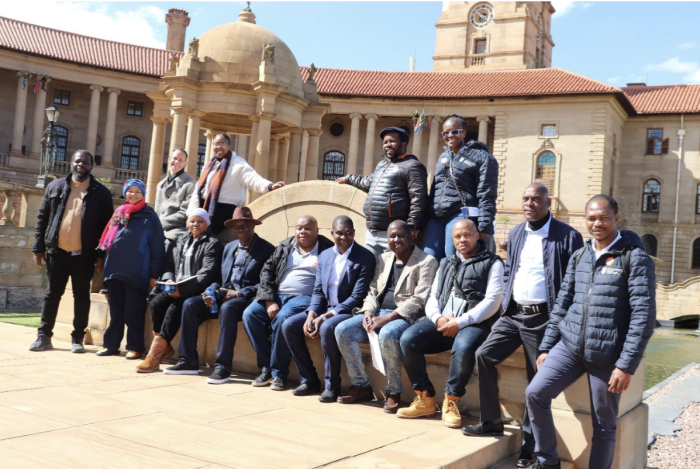
A team of members from various government departments and agencies (The Presidency, Departments of Sport, Arts and Culture; Environment, Forestry and Fisheries; Public Works; South African Heritage Resources Agency; Tshwane Municipality and National Heritage Council) received Mr Charles Akibode (the heritage expert) from International Council on Monuments and Sites.
All the key stakeholders attended the reception that was hosted by the Presidency at the Union Buildings represented by Ms Matsietsi Mekoa on 3 August 2023. She welcomed the expert from ICOMOS and declared the commencement of the evaluation mission official. Ms Mekoa expressed the value of the sites, especially the Union Building, to forging an understanding of different eras that reflect the history and hopes in Human Rights, Liberation Struggle and Reconciliation.
Ten sites that are related to the liberation heritage have been selected to form a serial nomination of the next world heritage sites in South Africa. The nomination is called Human Rights, Liberation Struggle and Reconciliation: Nelson Mandela Legacy Sites. Intense research and consultations have led to the successful submission of the voluminous dossier to UNESCO World Heritage Centre in Paris and the evaluation mission by Charles Akibode. This mission commenced on 3 August to visit all the sites that form part of the dossier:
- Union Buildings, Gauteng
- Walter Sisulu Square, Gauteng
- Sharpeville Massacre, Memorial and Graves Site: Police Station, Gauteng
- Liliesleaf, Gauteng
- 16 June 1976 – The Streets of Orlando West, Gauteng
- Constitution Hill, Gauteng
- Ohlange, KwaZulu-Natal
- University of Fort Hare and ZK Mathews House, Eastern Cape
- Waaihoek Wesleyan Church, Free State
- The Great Place at Mqhekezweni, Eastern Cape
Akibode’s visit to South Africa as a heritage expert of ICOMOS is a culmination of work that commenced ten years ago when a decision was made to preserve the heritage of the freedom and liberation struggle in South Africa.
According to Mr Akibode, the main purpose of the technical evaluation missions is to make an on-site evaluation of the conditions of Integrity and Authenticity; the State of Conservation, the Factors Affecting the Property, the Protection and Management Systems; the Boundaries of the nominated property and its Buffer Zone; and the Interpretation and Presentation of the site and its Visitor and Tourism strategies.
Mr Akibode explained the role of ICOMOS and presented an in-depth report on the technical evaluation’s expectations.
The process is expected to take 16 months to complete from the date the organisation received the nomination from the UNESCO World Heritage Centre, which was in March.
“The visit will be followed by a desk review, a report written by an expert either on the significance of a property nominated for inscription on the World Heritage List or on specific issues as cultural tourism management, risk preparedness at site level, and protection and management aspects,” explained Mr Akibode.
This novel sphere of heritage was inspired by a UNESCO meeting that was hosted for the first time by South Africa in the continent in 2005. The Roads to Independence: African Liberation Heritage’ Programme (ALHP) was adopted in 2005 at the 33rd General Conference of UNESCO, recognising struggle heritage as being of universal value and significance.
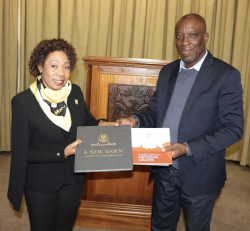
One of the key resolutions at this meeting was to increase and balance the world heritage sites in Africa. When the programme of embarking on preserving the story of the “Roads to Independence” for Africa, the south African chapter focused on telling it tale through the “Resistance and Liberation Heritage Route”. It is this project that the Department of Sport, Arts and Culture assigned to its Agency, the National Heritage Council, to implement.
“As the implementing agent for South Africa’s country chapter of the Resistance and Liberation Heritage Programme, the National Heritage Council has undertaken research that yielded over 400 resistance and liberation heritage sites, with various degrees of significance – local, provincial, national and sometimes international. It has developed a robust domestic and international heritage approach over the years” said Dr Ndivhoniswani Lukhwareni, CEO of the NHC at the welcome ceremony that was held at the Union Buildings in Pretoria.
Today’s watershed moment, is a culmination of years of work, consultations, research, interactions, workshops, side events, revisions and reiterations of the nomination dossier, to the point where it is now. This dossier has walked a remarkable journey, has undergone significantly elaborate scrutiny at different levels, and has benefited from the wisdom and passion of diverse people, in the country, the continent and the world.