
Cultural Heritage as a Strategic Resource and a Human right
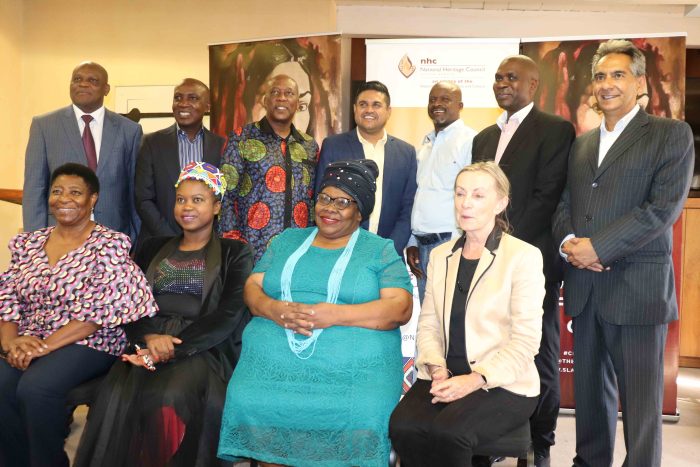
The panel of speakers included; Mr Edward Mafadza – CEO of CRL Rights Commission; Dr Nokuzola
Mndende – Director of Nokuzola Mndende Holdings South Africa; Khoeses Bronwyn Michelle
Andrews, Khoisan community leader, Commissioner and Activist; Ms Palesa Kadi – Chairperson
South African Geographic Names Council and Mr. Vusithemba Ndima- Deputy Director-General –
National Department of Sport, Arts and Culture.
The National Heritage Council of South Africa (NHC) in partnership with the Department of
Sport, Arts and Culture commemorated Human rights month with a Cultural Heritage
dialogue under the theme “Heritage as a strategic resource and a human right” on 24 March
at Castle of Good hope which has recently been declared a national heritage site.
Ms Laura Robinson, the NHC Western Cape representative in her welcome remarks
expressed her excitement about NHC reaching out to the Western Cape province. “Heritage
as a strategic resource and a human right is becoming increasingly important to all of us in
this time of global strife and challenges generally. With different lives and many years of
experience as a Heritage practitioner, recently I’ve become the focal point for the
International Council of Monuments and Sites on an initiative called “Our common dignity”, a
rights based approach to heritage, and this I believe ties in strongly with what we are going
to be talking about today.”
and how wonderful it is to have seen that transformation from a place where people felt
excluded and didn’t want to come to a venue and museum that is welcoming all-embracing
and tells a very rich story of all the inhabitants of our wonderful country from the indigenous
people through to settlers, colonists and even contemporary. The richness of meaning and
the ability to tell an inclusive story is really one of the fundamentals of our work in Cultural
Heritage.
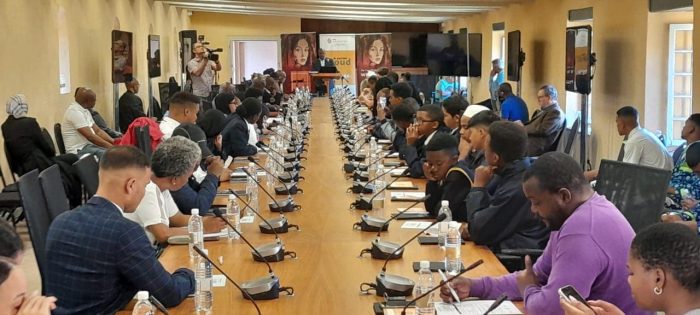
In his opening remarks, CEO of the Council, Dr Ndivhwu Lukhwareni said, “as you would
recall the movement of people in search of better opportunities for themselves, their animals
and off springs brought into contact people of different attire, religious practices language
cultures etc. The early misguided approach was that of comparative nature –my language is
better than yours, I’m better than you etc. a lot of people lost their lives because of the ‘better
than thou’ notion”.
These days we have learnt from our mistakes because culture is a strategic tool off late and
it is also an economic tool”.
“The main objective of this dialogue, is to showcase that heritage as a resource, should take
us to the basic principles of doing life, which is love dignity, honesty, truth, faithfulness,
humility, justice” said Dr Lukhwareni.
Mr Siphiwo Mavumengwana, programme director for the day, enlightened the learners in the
room to think about where they come from, what the role of traditional leaders as custodians
of heritage is and what role traditional leaders can play in promoting our cultural heritage?
Mr Edward Mafadza, CEO of Commission for the Promotion and Protection of the Rights of
Cultural, Religious and Linguistic Communities spoke about Strengthening the relation
between the protection of cultural heritage and human right.
“The Commission is tasked with a huge mandate of promoting and protecting the
cultural, religious and linguistic rights of communities. There’s a rationale behind
that, it was well understood by the crafters of the constitution that South Africa was
and is still a divided society.
“Human rights, Community rights, stakeholder rights Indigenous people are an integral and
essential part in our work in cultural heritage”, she added.
Laura further paid tribute to the Castle of Good hope on how significantly it has transformed
over the past years
The CRL commission must respond to this challenge as one of its object to unite our society
and to promote social cohesion, to foster peace in our communities, promote friendship,
humanity, tolerance in order to build the so called “Rainbow nation”. Given our historical
background we still have a huge task ahead of us to continue to building a united, caring,
proud and patriotic society.”
Khoeses Bronwyn Michelle Andrews – Khoisan community leader, Commissioner and
Activist briefly did her address on Preservation and promotion of intangible cultural heritage,
including IKS, as part of redressing the past imbalance on heritage management. “I was not
aware that being a woman from my community, my work is being recognized. I’m not here to
look back into past, I’m here to look into the future. Our cultural heritage is of great
importance these days. We need to understand our background and our history we need to
understand where we are coming from. Our language is the voice of our ancestors from the
beginning of time”.
Standardization and renaming of place-names as part of heritage transformation,
preservation and promotion was the Ms Palesa Kadi’s focus topic.
Ms Palesa Kadi is the Chairperson of the South African Geographic Names Council
(SAGNC). She expressed her love for young people and explained the work of the SAGNC
by mentioning the places that can possibly be named or renamed.
Ms Kadi said “the work we do is greater than changing names and putting them on a
template. It is also about what we want our future to look like. I want to live longer, to see
these cohorts sitting here making names and also presiding over those names, calling them
with their right pronunciation, relating to them, and also understanding their naming and how
history is brought about those names and meaning.”
Kadi said, “Symbolic preparation is when we remember those who departed and blood was
shed. We don’t want to forget them, we want to memorialise them and work around their
names.”
Traditional Leaders play a very central role in promoting and preserving our cultural heritage.
Dr Nokuzola Mndende – Director of Nokuzola Mndende Holdings South Africa spoke about
the role and the significance of Traditional leaders and communities on heritage awareness
and advocacy. Mam Nokuzola said that she divided her papers into four but she will focus on
Nostalgic idea and Suffocation. “The roles that Traditional Leaders had in the colonial era
and need to be restored”, she asked, “how do we restore those roles?”
“My first focus topic is Suffocation. That good role of the traditional leaders “ubukhosi” then
became suffocated by colonialism and spirituality. the colonialist after they were given land
by abase bukhosini when they arrived, instead of obeying the rules of land they used force to
destroy all the existing structures they find. Colonial education was for the subordination,
exploitation creation of mental confusion” said Dr Mndende. She pointed out that “K’omkhulu
is a place of safety, any stranger that comes to the rural community is sent. She
emphasised that “today, Traditional Leaders are subjects of the subjects”.
Mr Vusithemba Ndima, Deputy Director-General from the National Department of Sport, Arts
and Culture presented a paper on Cultural Heritage as a strategic resource. He started off
his paper by boldly saying “I like going back!” Because he believes that it’s always important
to go back and talk about the past no matter how painful it is. “The choice of the venue is
befitting because of its heritage value. By heritage value, I don’t mean it carries only good
memories”, he said.
Mr Ndima then borrowed from Andreas Huyssen a Villard Professor of German and
Comparative literature from Columbian University who referred to the city of Berlin as a
palimpsest because of the good and bad historical memories. If you haven’t subscribed to
NHCs YouTube Channel, do so to access the full version of the Human Rights Month 2023
dialogues: https://www.youtube.com/watch?v=_fhMyzJp7Z4